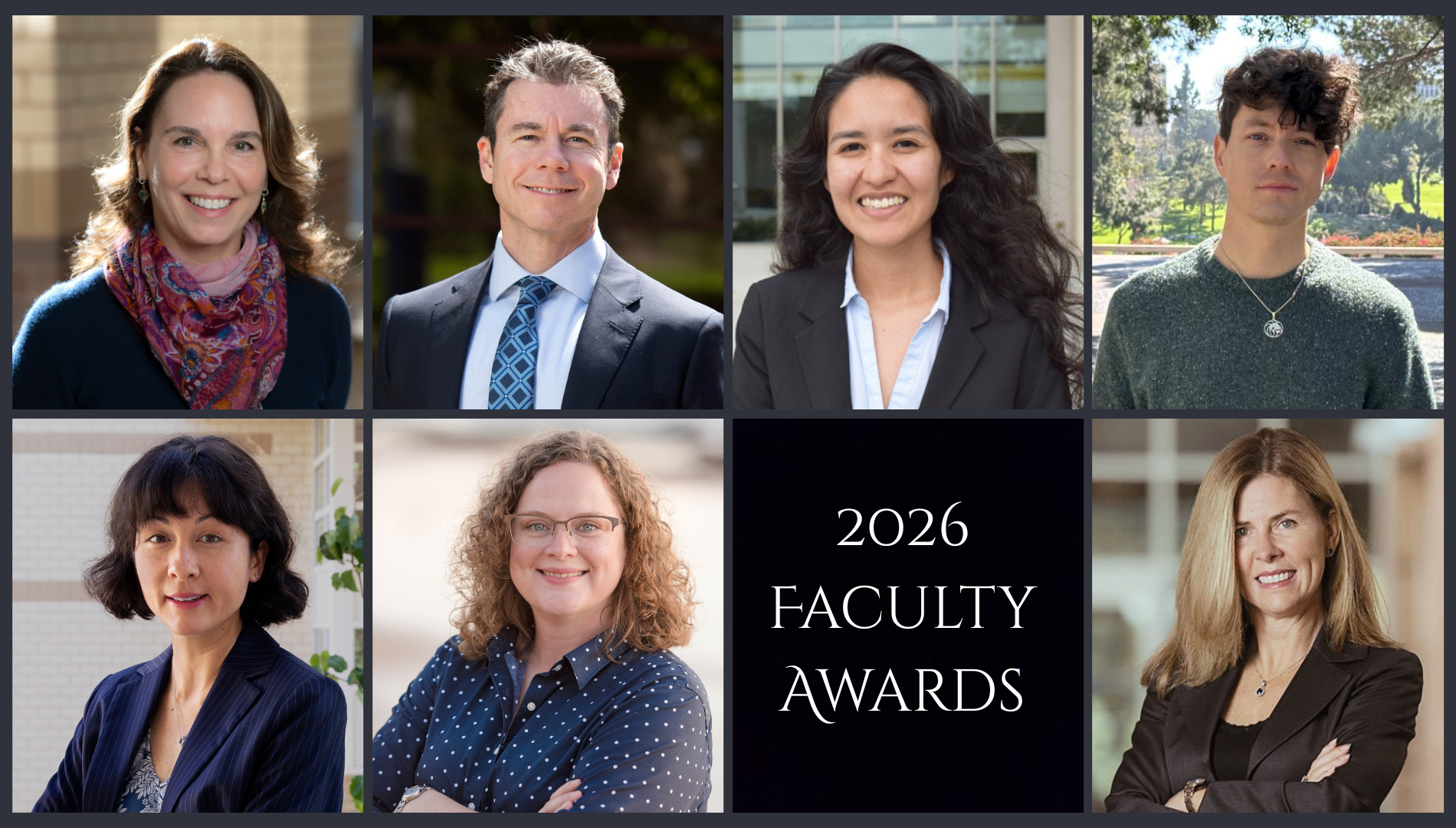
Top row, from left: Charis Kubrin, Jason Schiffman, Carolina Valdivia and Brandon Golob. Bottom row, from left: Jessica Debats Garrison, Jenny Rinehart and Elizabeth Cauffman.
7 inaugural recipients to be feted
UC Irvine's School of Social Ecology will gather on Oct. 26 to honor its finest educators, researchers and servant-scholars at its inaugural Faculty Awards ceremony — a celebration recognizing the extraordinary people making an impact in their academic communities.
“This is a school full of stars,” said one nominator, and the inaugural class of honorees makes that abundantly clear.
From a criminologist who just won the “Nobel Prize of criminology” to a first-year professor already transforming student lives at a staggering pace, the 2026 winners represent the very best of what Social Ecology stands for: rigorous scholarship, inspired teaching, dedicated service and a profound commitment to making the world more just, Dean Jon B. Gould said.
“Our faculty don’t just advance their fields, they change laws, transform lives and make communities better,” he said. “These awards are our way of saying: we see you, we celebrate you and the world is better for your work.”
Faculty Award for Research
Charis Kubrin
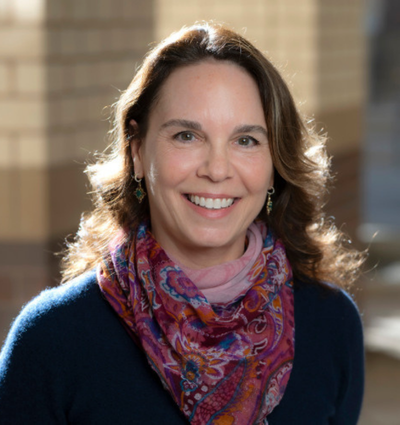
If there is a single moment that crystallizes the magnitude of Charis Kubrin's career, it may be this: she received the Stockholm Prize in Criminology, widely known as the “Nobel Prize of Criminology,” this year for her myth-busting research demonstrating that immigrants commit crimes at lower rates than their native-born counterparts.
At a time when public debate on immigration has never been more charged, Kubrin, Chancellor’s Professor of criminology, law and society, and her colleagues answer the noise with meticulous empirical science. The award places her, as one nominator put it, “in a unique echelon.”
The Stockholm Prize is only the latest chapter in a career of extraordinary achievement.
Kubrin has published six books, 59 peer-reviewed articles, 24 invited chapters, and 29 reports, encyclopedia entries, and amicus briefs, accumulating more than 12,000 citations on Google Scholar and major grants from the National Institute of Justice and the National Science Foundation. Her work spans three defining areas: criminal justice reform and public safety, immigration and crime, and the use of rap lyrics as evidence in criminal trials— and she is widely regarded as among the foremost national scholars in each.
“The fact that Dr. Kubrin is the foremost scholar nationally on multiple topics is quite telling in terms of her accomplishments and stature,” wrote her nominator.
Kubrin’s impact extends far beyond the academy.
She has testified before the U.S. House of Representatives on criminal justice reform, written op-eds for the New York Times and the Los Angeles Times, delivered TED talks, prepared a 100-page legal guide for attorneys whose clients face prosecution involving rap lyrics as evidence, and spoken to Public Defenders’ offices across the country.
Her research, one nominator noted, touches on “issues of safety, fairness, inequality and free speech that are at the heart of social well-being.”
Said Kubrin: “This award means a great deal to me because what I truly appreciate about being a professor in the School of Social Ecology is our shared mission, namely, that science should serve society.”
Jason Schiffman
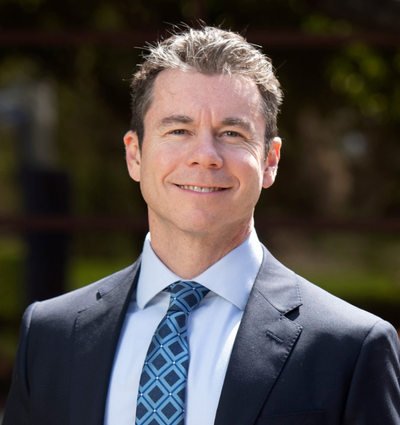 Jason Schiffman, associate dean of the School of Social Ecology, professor of psychology and director of clinical training, has spent his career asking one of the most urgent questions in mental health research: how do we identify young people at risk for psychosis — early, accurately, and equitably — before their lives are potentially derailed? The answer, built across more than 240 scientific publications, has reshaped a field.
Since joining UCI five years ago, Schiffman has published more than 100 journal articles, many in high-impact outlets such as JAMA Psychiatry, American Journal of Psychiatry, and Nature Mental Health, and many featuring student co-authors. His nearly $20 million in extramural funding, including major support from the National Institute of Mental Health and the Substance Abuse and Mental Health Services Administration, reflects sustained federal confidence in the significance of his work.
What makes Schiffman’s record especially remarkable is his indispensable role in large-scale, multi-site science. In a six-site study, he is the sole diagnostician for all sites. In a 27-site ProNET consortium, he serves as lead diagnostician and site principal investigator.
“He is not a peripheral contributor. He is a central architect of the work,” wrote his nominator. “In a research area where careful diagnosis is everything, his contribution is foundational.”
Schiffman has pushed the field toward more equitable science, asking not just whether a screening tool works, but for whom, under what conditions and with what implications for health disparities.
He is one of only a handful of certified national trainers for the gold-standard Structured Interview for Psychosis-Risk Syndromes and has trained hundreds of clinicians and investigators across the country.
“He has helped define the science of psychosis risk, elevate the standards of assessment in the field, and push research toward more equitable and actionable outcomes,” Schiffman’s nominator concluded.
“Social Ecology is rooted in the belief that knowledge should translate into tangible benefits for others,” Schiffman said. “This award represents an appreciation for research that strives to lift others up. I couldn’t be more honored to receive it.”
Early-Career Faculty Award for Research
Carolina Valdivia
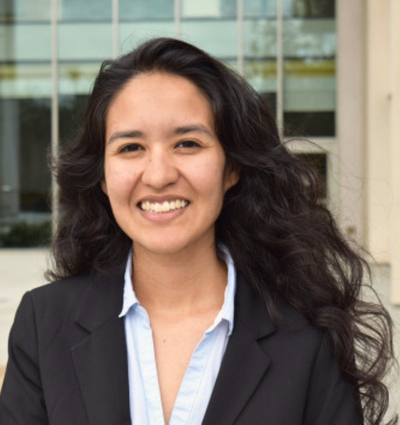 Carolina Valdivia, associate professor of criminology, law and society, is, in the words of her nominator, an academic “star” — and her record makes the case compellingly.
In a moment of intensifying immigration enforcement, Valdivia has produced some of the most timely and compelling scholarship in the field, grounded in years of careful, empathetic fieldwork with undocumented and mixed-status families.
Her centerpiece is her 2026 University of California Press book, Sanctuary Making: Immigrant Families Reshaping Geographies of Deportability, based on 103 in-depth interviews with families in the San Diego region and follow-up research with immigrant rights organizers.
The book introduces three original theoretical concepts: “geographies of deportability,” describing how enforcement expands into new spaces and relationships; “sanctuary making,” capturing the collective labor families use to protect one another; and “enforcement status,” which more precisely describes how families are positioned in relation to detention and deportation.
The book “is likely to become required reading for immigration scholars,” her nominator wrote.
Valdivia has also completed a study of family reunification post-deportation — difficult, high-risk research that documents what she calls “hyperillegality” — and a body of work on the barriers facing undocumented students and the educators who support them.
Her public impact is exceptional. Since 2011, she has run a blog, “My Undocumented Life,” which has drawn more than 2 million views and is featured on more than 200 school and organizational websites, making her a nationally recognized expert on best practices for supporting immigrant students.
“It is an honor to receive the Early-Career Faculty Award for Research, particularly because it recognizes not only my research thus far, but also the potential of the work ahead,” Valdivia said. “I also view this recognition as a collective effort. I am grateful to my colleagues, students, community members, and key stakeholders who have supported and contributed to this work in various ways. I look forward to continuing to pursue work that can have a meaningful and lasting impact.”
Faculty Award for Teaching
Brandon Golob
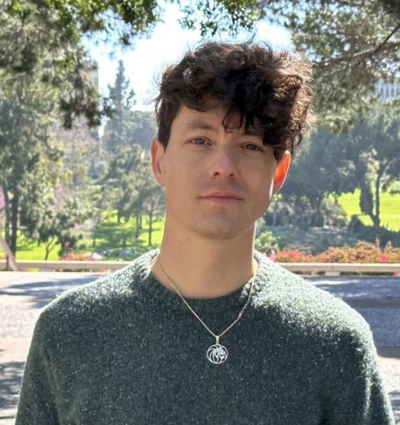 Ask students in the School of Social Ecology to name their favorite professor and one name comes up again and again. Brandon Golob, associate professor of teaching in criminology, law and society, has been voted “Professor of the Year” in Social Ecology by undergraduates for four consecutive years — 2020-21, 2021-22, 2022-23, and 2023-24. In 2024, he was also named one of Orange County’s “125 Most Influential” people by the Orange County Register, with his teaching singled out as the reason why.
But, Golob’s influence extends well beyond his own classes.
As associate dean of UCI's Campuswide Honors Collegium, which serves nearly 1,400 standout students from all majors, he has helped develop new interdisciplinary courses, launch a summer preparation program for underrepresented students in STEM, and create a faculty mentorship program for undergraduate entrepreneurs.
As the inaugural Learning Assistant Faculty Advisor in Social Ecology, he expanded the use of learning assistants across the school, while working with over 100 undergraduate LAs in his own courses. He has also supervised over 150 undergraduates in his research lab and 30 undergraduate thesis projects.
He has mentored over two dozen graduate students through the Division of Teaching Excellence and Innovation (DTEI), helped other faculty adopt tools to foster digital active learning as a DTEI Faculty Fellow for Digital Learning Excellence, and served as part of the UCI Faculty Academy for Teaching Excellence. He recently pioneered a doctoral “Transformative Teaching” seminar preparing future faculty to teach in an AI-enhanced environment.
He has been awarded over $100,000 in pedagogical development grants, including a UC Online award to create a cross-campus Hate Crimes course and an IMPACT grant to infuse it with AI-enhanced learning experiences such as role-playing scenarios.
His classroom innovations — having students produce podcasts, edit Wikipedia pages, and develop “know your rights” materials — are built on a philosophy of student-centered experiential learning.
“Dr. Golob stands out among UCI faculty for his pedagogical leadership, creativity, effectiveness, and impact,” wrote his nominator. “He is known for developing student-centered experiential learning approaches, devising class activities that have real-world applications... and generating excitement about learning and teaching.”
He’s also received the UCI Inclusive Excellence Teaching Award, the inaugural UCLA Alumni Association Award for Excellence in Civic Engagement, the UC Irvine Academic Senate Distinguished Faculty Award for Teaching, and a Certificate of Recognition from the California State Senate for “outstanding efforts educating the next generation of California leaders.”
“I’m honored to be selected by my colleagues for this award because they intimately understand the critical mission of what we do in the classroom,” Golob said. “Our shared commitment to the transformative power of higher education is what is most worth celebrating.”
Early-Career Faculty Award for Teaching
Jessica Debats Garrison
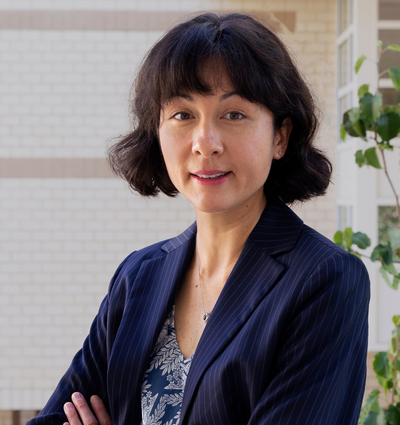 The numbers alone tell a remarkable story: of 14 courses taught during the review period, 12 received student effectiveness scores above 6.0 on a 7-point scale. Jessica Debats Garrison’s upper-division courses averaged 6.42 across eight sections — “the highest sustained average I can recall in our department,” wrote her nominator — while her graduate courses averaged 6.38.
She teaches seven courses annually, a load at which, as her nominator noted, “most faculty would struggle to maintain consistency across three or four.”
But, what truly distinguishes the associate professor of teaching in urban planning and public policy, is how she has reimagined what a university course can be.
She redesigned UCI's GIS specialization to incorporate emerging AI technologies, embedded basic needs resources into her syllabi, and built lasting, productive partnerships with real-world organizations.
Over three years, 70 of her students participated in the Southern California Association of Governments' Student Showcase Program; 11 were finalists, 5 won awards, and several received internships. SCAG's planning supervisor wrote unsolicitedly to praise the partnership as exemplary, calling her contributions transformative for students and the region alike.
Her Advanced GIS students analyzed client data for the Orange County Public Law Center to help the nonprofit organization reach underserved communities — work that the organization's Chief Legal Programs Officer described in an unsolicited letter to Dean Gould as significantly enhancing their understanding of civil legal need in the county.
Garrison also embodies the teacher-scholar ideal: her pedagogical research examines the cognitive and emotional challenges of teaching climate change, finding that climate anxiety can motivate political action more effectively than hope alone — research that emerged directly from her classroom and now informs her courses.
“Dr. Garrison’s willingness to take on our hardest courses, to redesign curriculum rather than repeat it, and to anchor her teaching in real community partnerships represents exactly the model of instructional excellence UCI should reward,” her nominator wrote.
“I am continually impressed by the passion and dedication of students here in Social Ecology,” Garrison said. “They give me so much hope for a more sustainable and equitable future. I’m honored to have the chance to work with them, and I’m honored to receive this award.”
Faculty Award for Service
Jenny Rinehart
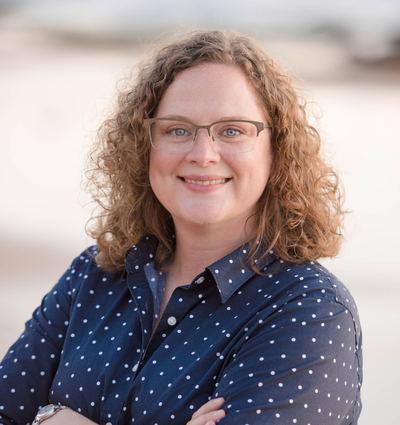 Jenny Rinehart's service record is a study in sustained, wholehearted commitment.
She served as School of Social Ecology Vice Chair (2023-2024) and Chair (2024-2025), Director of the Social Ecology Undergraduate Major and the Social Ecology Core Ph.D. program (2023-present), Chair of the Instructional Support Committee (2025), Faculty Advisor for the Psi Chi Honor Society (2024-present), and UCI Senate Assembly Representative (2023-2025).
At the university level, she has served on the Committee on Committees since 2024, working to ensure Social Ecology's faculty are well-represented and well-matched to campus needs.
“Many people when they leave service roles are happy to sit out and avoid further service,” wrote her nominator, “but Dr. Rinehart is regularly looking for the next way that she can contribute.”
That contribution shows up in unexpected places too — judging the Sunset Showdown, participating in the UCI CHC Battle of the Brains, showing up at WISE Wednesdays to connect with undergraduates outside the lecture hall and volunteering at the school’s Dia de los Muertos event.
The associate professor of teaching in psychology took on leadership of the Social Ecology Core Ph.D. program at a particularly delicate moment, as the program is sunsetting and requires careful stewardship to see its remaining students through to completion.
“She really embodies what service should look like on campus,” her nominator concluded, “and I think she’s extremely deserving of this award.”
Rinehart said: “I'm truly honored to receive this award. Service has always felt like an extension of being in the classroom — it's another way of showing up for our students, our colleagues, and the school. I'm grateful to my colleagues in Social Ecology, whose own commitment to service is what makes it so easy to keep saying yes.”
School of Social Ecology Better World Award
Elizabeth Cauffman
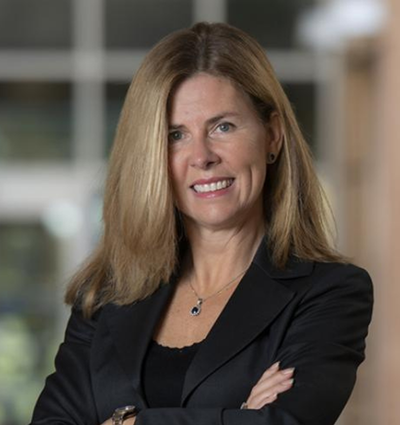 If any single faculty member embodies the mission of the School of Social Ecology — to create a better world — it is Elizabeth Cauffman, Distinguished Professor of psychology. Her research on adolescent development and juvenile justice has not merely informed the field; it has changed laws, shaped landmark Supreme Court decisions, and given scores of young people in Orange County a second chance at life.
Cauffman’s scholarship helped provide the scientific foundation for APA amicus briefs in Roper v. Simmons (which abolished the juvenile death penalty), Graham v. Florida, and Miller v. Alabama (which limited life-without-parole sentences for juveniles).
She has published more than 200 peer-reviewed articles, secured more than $45 million in grants, and built a research program with an h-index of 83 and over 30,000 citations.
She is a past president of the Society for Research on Adolescence and served on the National Academies committee that produced The Promise of Adolescence, described as the most downloaded report in the Academies' portfolio.
But what makes Cauffman's work exceptional is its translation into community impact. Her Crossroads study has followed more than 1,200 first-time juvenile offenders, producing landmark evidence on diversion and desistance.
Her Young Adult Court — developed in partnership with the OC Superior Court, District Attorney's Office, Public Defender's Office, Probation Department and Orangewood Foundation, and backed by more than $15.5 million in funding — gives 18-to-25-year-olds charged with eligible felonies the opportunity to have those charges dismissed upon successful program completion. To date, 76 young men have graduated from the program. Her Road to Reentry study is now applying the same rigorous, developmentally informed approach to young adults preparing to leave incarceration, with 45 participants having completed programming to date.
“These young men’s lives were literally transformed,” wrote one nominator who attended a YAC graduation. “It not only saved them from jail time but opened up opportunities that would not be possible with a felony on their record.”
Cauffman’s nominators were unambiguous in their enthusiasm. “I can think of few scholars at UC Irvine who more fully embody the purpose of this honor,” wrote one. “She is not simply a brilliant scholar. She is someone whose work matters in the world.”
Her recent honors include the 2026 Social Policy Achievement Award from the Society for Research on Adolescence, the 2024 William G. Steiner Heart of Service Award from the Orangewood Foundation, and the 2022 Mavis Hetherington Award for Excellence in Applied Developmental Science.
“I’m deeply honored to receive the inaugural Social Ecology Better World Award, but I see this recognition as belonging to the many students, colleagues, and community partners who have helped turn ideas and evidence into action,” Cauffman said. “I’ve always believed that science is most powerful when it leaves the page and improves people’s lives, and I’m grateful to everyone who has helped make that possible.”