
Figure from “Taxation at the Edges of Morality: A Statewide Experiment on Tobacco Enforcement in California,” presented at the UC Irvine Center for Population, Inequality and Policy on May 21. Wave 1 results from a statewide randomized experiment on tobacco tax enforcement shows that of 539 unannounced retailer inspections conducted across 10 zones earlier this year, 125 resulted in seizures of untaxed or prohibited tobacco products (23%).
Lively debate shapes future of Julian Gerez’s California tobacco tax compliance study
Social Science Plaza B Room 1222 was quiet around lunchtime May 21, save for the hum of the projector and the focused gaze of scholars and graduate students who had gathered to dissect the complexities of tax compliance. At the front, Julian Gerez, assistant professor of criminology, law & society, stood ready to present his latest research on a subject that sat at the intersection of public policy, behavioral economics and enforcement.
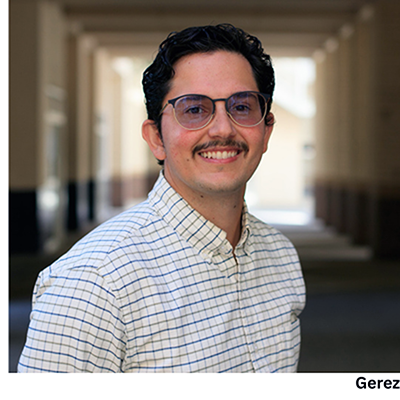 Gerez was deep into a randomized controlled trial (RCT) designed to understand whether “vice tax” compliance behaves differently from other forms of taxation. The focus of Gerez and his research partner Simone Paci of Stanford University is on the tobacco market in California, a state known for its aggressive tobacco control policies and high tax rates. As he navigated through his presentation, he touched upon four primary mechanisms that influence tax evasion: the rational choice framework, administrative frictions, tax morale and the concept of fiscal contracts.
“The fundamental question,” Gerez noted as he gestured to a slide outlining the varying parameters of detection and punishment, “is how we can effectively bridge the gap between policy intent and actual taxpayer behavior when it comes to highly regulated goods.”
The presentation was both theoretical and practical.
Gerez explored how California’s enforcement mechanisms — ranging from general tobacco control grants to specific penalties for violating the state’s flavored tobacco ban — function as a real-world laboratory for these theories. He was candid about the challenges inherent in this work, acknowledging the delicate balance required when studying illicit markets.
“When we analyze illicit trade, we aren’t just looking at missing revenue; we are looking at how regulatory environments themselves can either stifle or inadvertently incentivize evasion,” he explained.
As the floor opened for discussion, the audience, composed of experts in psychology, criminology and political science, offered a flurry of insights.
Graduate students and faculty alike weighed in, eager to refine the methodology of the RCT. Several attendees suggested that Gerez broaden his focus to compare these findings directly with the emerging legal marijuana market, noting that the “vice” characteristics might overlap significantly, even if the regulatory frameworks differ.
Others pushed for a deeper look at the role of “tax morale,” specifically suggesting that Gerez incorporate qualitative surveys of small business owners to see how their perceived social duty to pay taxes shifts in response to changing enforcement strategies.
Another suggestion from the back of the room sparked a lively debate: Some attendees recommended testing whether the certainty of punishment — rather than the severity — might have a more measurable impact on compliance rates among small retailers. Gerez took the feedback in stride, noting the value of these diverse perspectives in strengthening his study.
“It is this kind of rigorous, interdisciplinary scrutiny that transforms a good data set into a transformative research project,” he remarked to the group.
The session concluded with a renewed sense of purpose.
Gerez walked away with a wealth of potential adjustments for his ongoing collaboration with the California Department of Tax and Fee Administration. As the group dispersed, it was clear that the dialogue had not just challenged the current assumptions about tobacco taxation, but had charted a clearer, more nuanced path forward for the study of tax compliance in an ever-shifting regulatory landscape.
“Having an opportunity to have these work-in-progress workshops really helps shape your paper and move forward,” Gerez said as his guests filed out of the room. “It’s able to help me improve on something that’s more of a raw product and turn it into a more cohesive finished product.”
That finished product is still months away. Gerez and Paci will continue gathering data through the end of summer before writing the paper, submitting it for peer review and—fingers crossed—getting it published.
— Matt Coker