
Grant backs UPPP study of California’s energy transition and refinery closures
The Resilient Energy Economies (REE) Initiative recently awarded a research grant to Department of Urban Planning & Public Policy Associate Professor Nícola Ulibarrí and doctoral student Sage Kime, along with UC Santa Barbara Associate Professor Ranjit Deshmukh. The researchers will dive into how California communities and workers handle refinery closures and what can be done to support them.
“In this project, I’m leading a mixed-methods, comparative case study that looks at two refinery closures in California: Phillips 66 in Wilmington/Carson and Valero in Benicia,” Kime explains. “The study is part of my dissertation research, and it focuses on both the economic impacts of refinery closures and how institutions coordinate transition planning and workforce supports in response.”
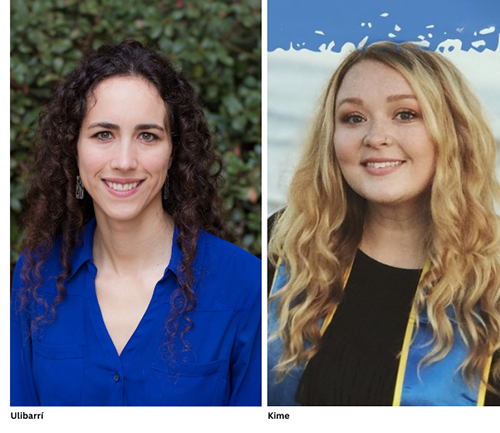 Kime adds that the project examines both the economic and governance dimensions of refinery closures.
“I will be surveying displaced refinery workers to better understand their employment outcomes and experiences navigating available support programs, as well as analyzing economic and fiscal impacts in each of the refinery regions,” the Ph.D. student says. “In parallel, I will interview institutional stakeholders involved in managing the closures and their impacts, including local and state government agencies, community organizations, and labor unions. Together, this research examines how transition planning and workforce supports are implemented, and how they shape economic recovery and resilience for workers and communities.”
The REE is a collaboration between the Center on Global Energy Policy at Columbia University, Montana State University, Resources for the Future, and the University of Notre Dame. Kime’s project is a perfect fit for the REE, which was established in 2024 to develop strategies that strengthen the economies of fossil fuel–dependent communities across the United States as the energy system transforms.
“We support action-oriented research to find what works, then transform that research into policy ideas for local, state, tribal, and federal policymakers,” states the REE. “We're also building a community of scholars, policymakers and economic development practitioners to share knowledge and build relationships across the nation's energy communities.”
As climate change intensifies and energy systems shift toward renewable sources, reliance on fossil fuels is expected to decline over time. Unfortunately, if not managed adequately, the decline of fossil fuels can exacerbate existing economic inequalities and create significant challenges for workers and communities that depend on these industries, Kime points out.
“While the decline of coal has been well studied, the oil and gas industry has received less attention,” she says. “However, this transition is already underway in California, where two of the state’s nine remaining oil refineries have announced plans to shut down in the past year — together accounting for 18% of the state’s refining capacity and supporting hundreds of high-wage jobs and critical local revenues.”
Kime considers the REE grant “especially meaningful because it directly supports my dissertation research at a critical stage in my graduate studies. The funding will allow me to travel to conduct fieldwork and compensate interview participants for sharing their time and experiences. As a Ph.D. student, this kind of support makes a big difference in what the research can look like and whose perspectives can be included.”
Looking at the event bigger picture, the support reinforces the importance of studying energy transitions in ways that center the experiences of workers and communities and connect to real-world policy challenges, according to Kime.
“Understanding how these transitions unfold in frontline communities, and how they can be managed more equitably, is critical for shaping effective energy transition policy,” notes Kime, who adds that advisors and project partners Ulibarrí and Deshmukh will “continue to provide invaluable feedback and mentorship throughout my research.”
— Matt Coker