Study reveals how end-of-world beliefs shape Americans’ response to global threats
In an era of climate anxiety, geopolitical tensions and rapidly advancing artificial intelligence, apocalyptic thinking is no longer confined to the fringes of society, according to new research published in the Journal of Personality and Social Psychology.
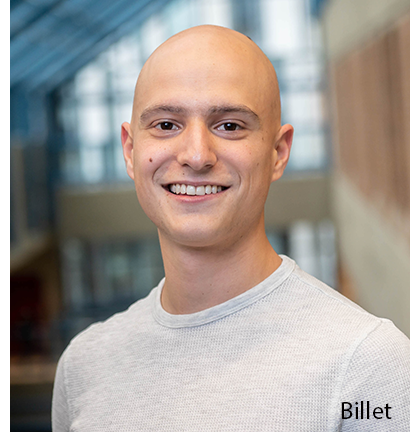 “Belief in the end of the world is surprisingly common across America, and it’s significantly influencing how people interpret and respond to the most pressing threats facing humanity,” says Matthew I. Billet, a postdoctoral scholar at the University of California, Irvine Department of Psychology and the study’s lead author.
“We are living in a culture awash in apocalyptic imagery,” he says. “What we found is that apocalyptic thinking isn’t reserved for radical or fringe movements. These beliefs are held widely across diverse populations, and they have real consequences for how we confront global risks.”
The study, which surveyed 1,409 religiously diverse Americans, found that about one-third agreed that the world would end within their own lifetime. But the research goes beyond simple yes-and-no questions about doomsday, revealing that what people believe about the apocalypse — when it will happen, who controls it and what comes after — can dramatically shape their attitudes toward issues ranging from climate change and pandemic response to nuclear conflict and emerging technologies.
Five dimensions of the apocalypse
Billet and his colleagues at the University of British Columbia developed a comprehensive psychological measure of end-of-world beliefs, identifying five key dimensions that matter for how people think and act:
- perceived closeness (how soon the end will arrive),
- anthropogenic causality (whether humans will cause it),
- theogenic causality (whether divine or supernatural forces will cause it),
- personal control (how much influence one personally has over the outcome) and
- emotional valence (whether the end will ultimately be good or bad).
“Different narratives people believe about the end of the world can lead to very different responses to societal issues,” Billet explains. “Someone who believes humans are causing the apocalypse through climate change will respond very differently to environmental policy than someone who believes the end times are controlled by divine prophecy.”
The research revealed differences across religious denominations.
“Everyone agrees on one thing, we humans play an important role in the fate of our species,” Billet says. “This was as true for the religious as it was for the non-religious. However, there were also differences between religious denominations that were quite stark. While we might hear a lot about evangelical apocalyptic thinking, we also find that Muslims are very much concerned with apocalyptic prophecy and what will come after. These differences point to how religion — and culture more broadly — can shape how we fundamentally view the world and our collective future.”
Religion explains what people believe about the end of the world, but “we also found that age, socioeconomic status, and other factors play important roles,” Billet adds. “Interestingly, end-of-world beliefs generally declined with age, except among evangelical Protestants and Muslims, where they remained stable or even increased.”
The study’s most significant finding may be how such beliefs translate into action, or inaction.
The researchers asked participants about five categories of global existential risks identified by the World Economic Forum: economic, environmental, geopolitical, societal and technological.
Those who believed the end is near and that humans are causing it perceived greater risk and supported more extreme action to address threats. However, those who believed divine forces control the apocalypse were less likely to support preventive measures.
“This has profound implications for policy and collective action,” Billet notes. “When people believe the end times are in God’s hands, they may be less motivated to support policies addressing climate change or other human-caused risks. On the other hand, those who feel personal control over the apocalypse are more willing to accept dramatic governmental and economic interventions.”
Why it matters
The research comes at a critical moment when global coordination is essential to address existential threats, he says.
“These differences can create disagreements across cultural groups that make it difficult to coordinate responses to global risks, both within countries and between countries,” Billet warns. “Today, beliefs about accepting the Mark of the Beast from the Last Days undermine efforts at mass vaccination against COVID-19. The dread of climate apocalypse undermines young people’s motivation to tackle climate change and to bring children into this world.”
The study also challenges previous research that suggested apocalyptic believers simply have shortened time horizons and care less about the future. Instead, the multidimensional framework reveals much more nuanced patterns.
“We found that believing the world will end soon actually predicted greater support for extreme action to address current threats,” Billet explains. “It’s not that these believers don’t care about the future. They care deeply, but the specific content of their beliefs shapes how they want to respond.”
Call for understanding
Rather than dismissing apocalyptic thinking as irrational, Billet argues that understanding these beliefs is essential for effective communication and policy-making in an increasingly divided society.
“Whether or not any particular apocalyptic narrative is accurate, they are still consequential for how populations confront concrete risks,” he says. “If we want to build consensus around addressing climate change, AI safety or pandemic preparedness, we need to understand how different communities are interpreting these threats through their own cultural lenses.”
The research was conducted while Billet was at the University of British Columbia’s Department of Psychology and continued during his current position at UC Irvine. Co-authors include Cindel J.M. White (York University), Azim Shariff (University of British Columbia), and Ara Norenzayan (University of British Columbia).
“This is just the beginning,” Billet says. “We hope this framework will help researchers, policymakers, and community leaders better understand how people make sense of existential threats. In a world facing genuine catastrophic risks, that understanding has never been more important.”
— Mimi Ko Cruz